



SOUTH AFRICA DOES NOT HAVE A SKILLS PROBLEM. IT HAS AN ALIGNMENT PROBLEM
Reflections from the inaugural LulaTalks Forum, April 2026
South Africa’s skills and employment debate has become predictable. The diagnosis is repeated with almost ritual consistency: a mismatch between education and industry, a shortage of critical skills, and a need for more training interventions. The response is equally familiar: more funding, more programmes, more partnerships, more coordination frameworks.
Yet the outcomes remain unchanged.
According to Statistics South Africa’s Quarterly Labour Force Survey, the official unemployment rate remains above 32%, with youth unemployment at approximately 46% and the expanded unemployment rate at around 43% (Statistics South Africa, 2025). These are not marginal inefficiencies in the system. They are indicators of structural breakdown.
South Africa does not primarily have a skills shortage. It has a systemic alignment failure between education, funding mechanisms, industry absorption and labour market design.
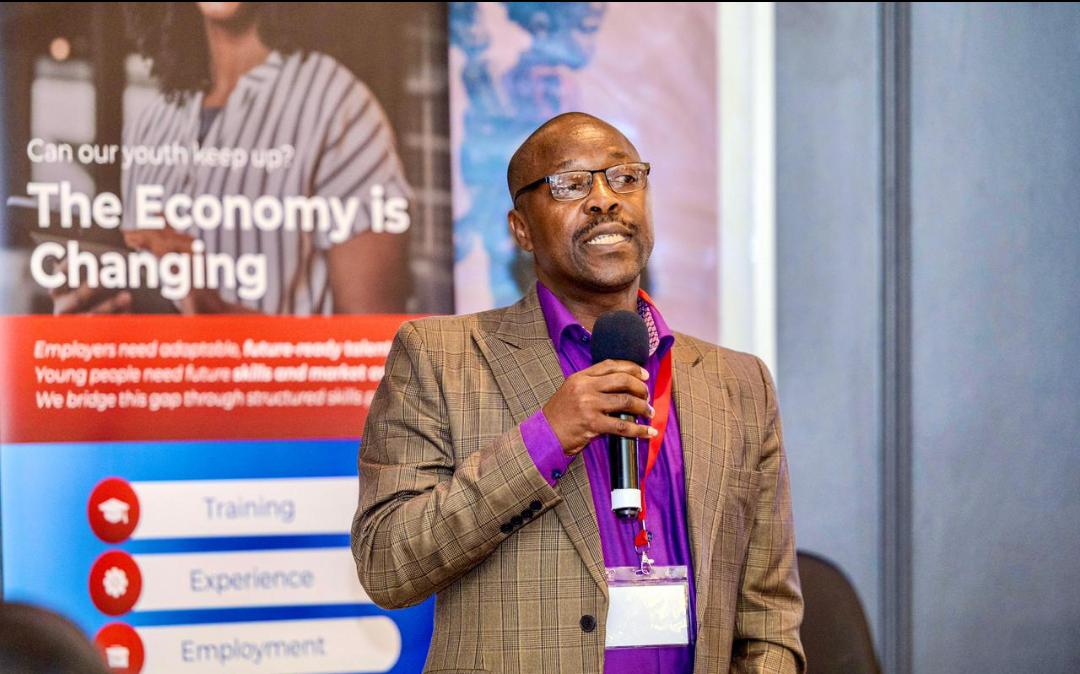
That was the central thread emerging from the inaugural LulaTalks Forum held in Johannesburg in April 2026. What made the forum significant was not the novelty of ideas, but the consistency with which different stakeholders described the same underlying problem: a system that produces training activity at scale, but does not reliably produce employment outcomes.
The crisis is not the absence of effort. It is the absence of alignment.
THE COST OF INACTION: A SYSTEM WITHOUT COHERENCE
The forum opened with a keynote address by Neo Bodibe, General Manager: Employee Relations at Transnet SOC Ltd, who framed the discussion in uncompromising terms.
She highlighted persistent throughput failures in the education system, the widening gap between regulatory frameworks and labour market realities and the limitations of fragmented interventions that operate without system-wide coordination.
Her warning was direct: “If regulations do not evolve with technology, inequality will evolve without them.”
The significance of this statement lies not in its rhetorical weight, but in its’ diagnosis. South Africa is not suffering from a lack of policy instruments. It is suffering from a lack of coherence between them.
Bodibe’s central argument was that South Africa’s talent base is not the constraint. The constraint is the absence of aligned systems capable of converting that talent into economic participation at scale.
This distinction is critical. It reframes unemployment not as a labour supply problem, but as a systems integration failure.
FROM SKILLS TO SYSTEMS: WHY TRAINING IS NOT TRANSITION
A dominant assumption in South Africa’s labour discourse is that unemployment is primarily a skills problem. If people are trained, the labour market will absorb them.
However, this assumption collapses under scrutiny.
South Africa continues to produce large volumes of certified graduates across multiple sectors, yet labour absorption remains weak. The transition from education to employment is fragmented, uneven and often delayed.
World Bank labour market analysis shows that South Africa performs poorly in converting education into employment compared to peer emerging economies, with many young people remaining unemployed long after exiting formal education (World Bank, 2024).
The problem is not isolated to one stage of the pipeline. It spans the entire transition chain:
- School completion does not reliably lead to employability
- Post-school training does not reliably lead to job placement
- Job placement does not reliably lead to sustained employment
The system does not fail at a single point. It fails across transitions.
This is why increasing training output does not resolve unemployment. It only increases system pressure without addressing structural absorption capacity.
POLICY AND REGULATION IN THE DIGITAL ECONOMY: A FRACTURED RESPONSE
The first panel of LulaTalks, moderated by Dr Onyinye Nwaneri, Managing Director at Sesame Workshop International, examined how policy and regulation are adapting to the realities of a digital economy increasingly shaped by platform work, gig employment and informal labour structures.
The discussion revealed a consistent tension: South Africa is attempting to regulate a rapidly evolving labour market using frameworks designed for a different economic era.
Jocelyn Vass, Chief Director: Skills for the Economy at the Department of Trade, Industry and Competition (DTIC), highlighted the long-term structural decline of manufacturing, noting that its’ contribution to GDP has fallen from approximately 25% in 1981 to around 10–12% today. She argued that reindustrialisation and the protection of decent work must remain central policy priorities.
Dr Khwezi Mabasa, Policy Researcher at the University of the Witwatersrand, raised a different concern: platform-based work risks reproducing historical inequalities if not deliberately regulated. He cautioned that without intentional policy design, race, class and gender disparities will be embedded into new forms of digital labour. He also proposed cooperative ownership models and recognition of data as a public economic asset.
Dr Percyval Bayane, Researcher at the University of South Africa, shifted the focus to lived experience. He argued that compliance-driven regulatory approaches fail to address the realities of income instability, precarity and safety risks faced by platform workers. His position emphasised the need for hybrid regulation that balances flexibility with protection.
Temosho Sekgobela, Senior Legal Counsel at Takealot Group, highlighted the dual nature of digital platforms: while they enable SME participation, market access and new forms of inclusion, they also risk excluding local operators if compliance requirements are not carefully calibrated. She emphasised the need for demand-driven skills mapping aligned to real technology gaps in the economy.
What emerged from the panel was not disagreement, but fragmentation. Each perspective addressed part of the system, but no single framework connected them.
THE FUNDING PROBLEM: INCENTIVES THAT MISALIGN OUTCOMES
One of the most persistent structural distortions in South Africa’s skills ecosystem is the way success is measured.
Funding models in skills development largely prioritise inputs:
- Number of participants enrolled
- Number of certifications issued
- Programme completion rates
These metrics are administratively convenient and auditable. However, they do not measure the only outcome that matters: employment.
This creates a systemic distortion. Training becomes an end in itself rather than a mechanism for labour market absorption. Programmes are often designed to satisfy funding requirements rather than employer demand.
As a result, South Africa has developed a skills ecosystem that is highly active but weakly outcome-driven.
In practice, this produces a growing gap between certification and employability, particularly in entry-level sectors where employers report that additional workplace readiness is required beyond short training cycles.
Attempts to correct this through entrepreneurship narratives or informal sector absorption strategies often diffuse accountability further, rather than strengthening employment alignment.
THE DIGITAL ECONOMY ILLUSION
There is a growing assumption that digital transformation will naturally resolve South Africa’s employment crisis. The evidence suggests otherwise.
While digitalisation expands economic activity, it does not automatically expand employment. In many cases, it restructures labour markets toward higher skill concentration and platform-mediated work, while reducing middle-skill entry pathways.
OECD analysis consistently shows that digital economies tend to polarise labour markets, expanding high-skill and low-skill work while hollowing out intermediate opportunities (OECD, 2023).
In South Africa, this effect is compounded by structural constraints:
- Limited domestic ownership of digital platforms
- Uneven access to affordable connectivity
- Weak early-stage funding ecosystems
- Fragmented digital skills pipelines
As a result, digital growth does not translate directly into inclusive employment expansion. It often produces economic activity without proportional job creation.
THE REAL PROBLEM IS NOT CAPACITY. IT IS COORDINATION.
South Africa does not lack institutions in its’ skills ecosystem. It has one of the most developed institutional landscapes in the Global South, including Sector Education and Training Authorities (SETAs), the National Skills Fund, government departments, industry bodies and training providers.
The issue is not absence. It is fragmentation.
Each part of the system operates with different incentives:
- Training providers optimise for throughput
- Funders optimise for compliance
- Government optimises for programme delivery
- Employers optimise for productivity
Individually, these are rational. Collectively, they produce misalignment.
Even where coordination mechanisms exist, they often lack sustained integration with labour market intelligence and real-time employer demand.
The result is a system that generates significant activity but inconsistent employment outcomes.
WHERE OPPORTUNITY STILL EXISTS
Despite structural challenges, certain sectors demonstrate clear absorption potential when alignment is achieved.
The Global Business Services sector remains one of the strongest examples of scalable youth employment when training is tightly linked to employer demand.
Manufacturing and infrastructure sectors also present opportunities, particularly in the context of green industrialisation, but require deliberate localisation strategies.
Digital entrepreneurship continues to grow but remains constrained by funding access and ecosystem support gaps.
Across all these sectors, one pattern is consistent: where alignment exists between training, industry, and funding, employment follows. Where it does not, outcomes collapse.
CONCLUSION: A SYSTEM DESIGN PROBLEM
South Africa does not need more skills programmes.
It needs its existing system to function as a system.
That requires a fundamental shift in how success is defined and incentivised. Employment outcomes must become the primary metric of success, not training outputs. Employers must move from advisory roles to co-design roles. Funding must follow labour market demand, not institutional convenience.
None of these changes are conceptually complex. They are institutionally difficult.
But without them, South Africa will continue to invest heavily in skills development while failing to convert that investment into employment at scale.
The conclusion from LulaTalks is not that South Africa lacks solutions.
It is that it lacks alignment between them.
And until that changes, the skills crisis will remain what it increasingly is: not a failure of capacity, but a failure of connection.
References
Statistics South Africa (2025) Quarterly Labour Force Survey
https://www.statssa.gov.za/?page_id=1854&PPN=P0211
World Bank (2024) South Africa Economic Update
https://www.worldbank.org/en/country/southafrica/publication
OECD (2023) Future of Work and Employment Outlook
https://www.oecd.org/employment-outlook/
Speakers (LulaTalks Forum, end April 2026)
Neo Bodibe – General Manager: Employee Relations, Transnet SOC Ltd
Dr Onyinye Nwaneri – Managing Director, Sesame Workshop International (Moderator)
Jocelyn Vass – Chief Director: Skills for the Economy, Department of Trade, Industry and Competition (DTIC)
Dr Khwezi Mabasa – Policy Researcher, University of the Witwatersrand
Dr Percyval Bayane – Researcher, University of South Africa
Temosho Sekgobela – Senior Legal Counsel, Takealot Group