



Saving for Safer Futures: 168 Northern Cape Learners Gain Financial Skills to Make Better Life Choices
National Savings Month initiative combines financial literacy with crime prevention to equip young people for safer, more resilient futures
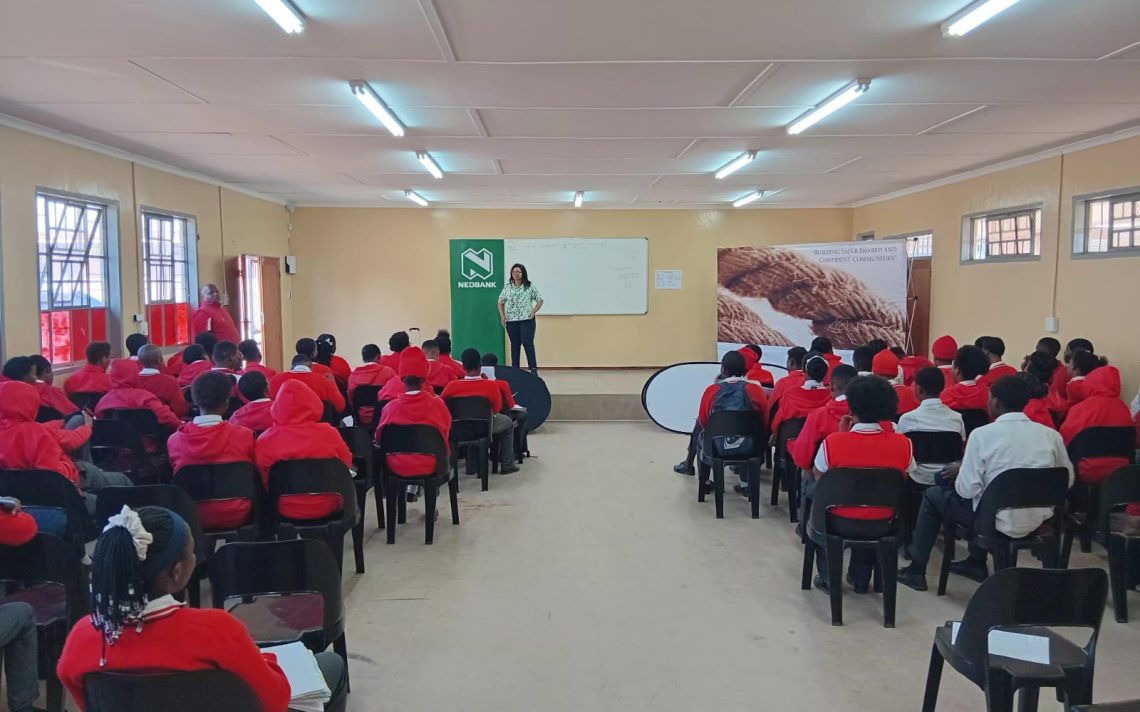
As South Africa marks National Savings Month this July, 168 learners from Vuyolwethu Secondary School and Floors No. 2 Secondary School have gained practical financial skills designed to help them budget, save and make responsible money decisions, while strengthening their ability to choose positive pathways away from crime, violence and substance abuse.
The learners were recognised today at a graduation ceremony hosted by the Safer South Africa Foundation (SSAF) at Vuyolwethu Secondary School in Kimberley after completing the Foundation’s flagship Communities and Justice Programme (CJP). With support from The Banking Association South Africa (BASA), through its member bank Nedbank, the programme included financial literacy training that connected responsible money management with personal agency, long-term planning and economic resilience.
The intervention was introduced after SSAF, school leadership and local stakeholders identified challenges affecting learners, including bullying, substance abuse, violence and incidents of group fighting. By combining crime-prevention education with practical financial knowledge, the programme helps learners understand both the consequences of harmful choices and the opportunities that disciplined planning can create.
Rather than offering a once-off awareness campaign, the Communities and Justice Programme takes learners on a developmental journey. Through engagements with courts, correctional facilities and justice officials, they gain first-hand insight into the consequences of criminal behaviour while developing empathy, accountability, respect for the law and a deeper understanding of their role in building safer communities.
During the financial literacy sessions facilitated by Nedbank and Postbank, learners were introduced to budgeting, saving, responsible money management and the fundamentals of banking. These are essential life skills that can help young people set goals, distinguish between needs and wants, prepare for unexpected costs and make more informed financial decisions as they enter adulthood.
Since its launch in 2012, the Communities and Justice Programme has reached tens of thousands of learners across all nine provinces, making it one of SSAF’s flagship crime-prevention initiatives in support of South Africa’s National Development Plan and Vision 2030.
Saving Is About More Than Money
National Savings Month offers an important opportunity to show young people that saving is not defined only by how much money they have. It begins with habits: planning ahead, delaying immediate gratification, setting achievable goals and making consistent choices that protect their future.
For learners navigating difficult social and economic circumstances, these lessons can build confidence and a greater sense of control. Financial literacy does not solve the structural challenges facing young people, but it gives them practical tools to recognise opportunity, manage limited resources more intentionally and avoid financial decisions that may deepen their vulnerability.
Financial Capability as a Crime-Prevention Tool
The programme reinforces the link between economic empowerment and safer communities. When young people can imagine and plan for a viable future, they are better placed to pursue education, employment and entrepreneurship rather than viewing harmful or illegal activity as their only option.
By integrating financial education into a broader programme focused on citizenship, accountability and justice, SSAF and its partners are helping learners connect everyday choices with longer-term consequences. A savings goal becomes more than a financial exercise: it becomes practice in discipline, self-belief and future-focused decision-making.
Every learner honoured today therefore represents more than a programme graduate. Each certificate reflects growing knowledge, resilience and possibility; and a young person better equipped to contribute to a safer school, a stronger family and a more economically resilient community.
What They’re Saying
Speaking at the graduation ceremony, Gen. Riah Phiyega, Chief Executive Officer of the Safer South Africa Foundation, said:
“National Savings Month reminds us that helping young people build safer futures must include giving them the tools to build financially resilient futures. When a learner understands how to budget, save and plan, that learner gains more than money skills; they gain confidence, discipline and a stronger sense of possibility. Crime prevention begins by investing in young people early and ensuring they can see credible, positive pathways for their lives.”
Ms Linda Gcwabe, Provincial Financial Education Facilitator at Nedbank, represented Nedbank, a member bank of The Banking Association South Africa (BASA).
“Financial literacy is one of the most practical forms of empowerment we can offer young people. Saving is not only about the amount set aside; it is about developing the habit of planning for tomorrow. When learners understand how to manage money responsibly, they are better equipped to make informed decisions, build sustainable futures and contribute meaningfully to South Africa’s economy. We are proud to support these learners alongside the Safer South Africa Foundation and Nedbank.”
Ms Brenda Babuseng, Provincial School Safety Coordinator, Northern Cape Department of Education, said:
“Our learners face real social and economic pressures every day. This programme has given them practical knowledge, confidence and values that can shape the choices they make now and in the future. We are proud to celebrate this milestone with the learners from Vuyolwethu Secondary School and Floors No. 2 Secondary School, and we thank every partner that invested in their potential.”
Partnerships That Invest in Young People
The success of the Communities and Justice Programme reflects the power of collaboration. It brings together SSAF, school principals, educators, the South African Police Service, correctional services officials, justice-sector partners, local community stakeholders and private-sector organisations committed to youth development, including BASA and Nedbank.
As South Africa observes National Savings Month, the graduation of these 168 learners demonstrates why financial education belongs within the country’s broader youth-development and crime-prevention efforts. Safer communities are built not through enforcement alone, but by ensuring that young people have the knowledge, support and opportunities to plan, and save, for a future they can believe in.