



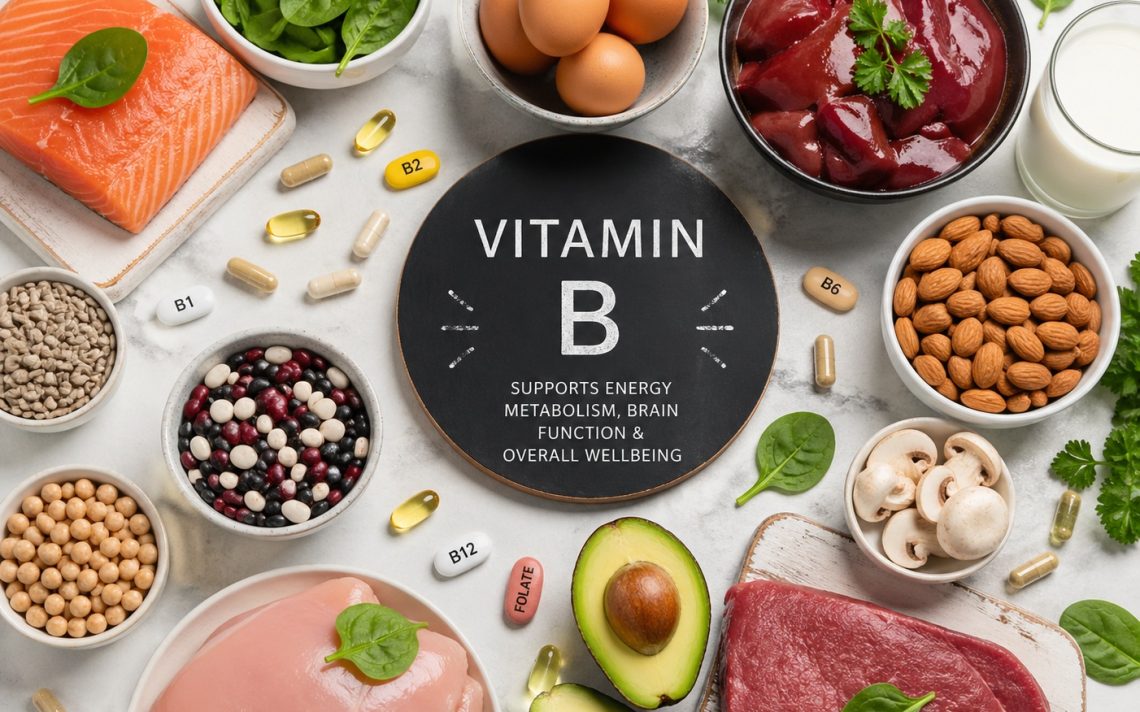
B The Best You Can B: Why the Often-Overlooked Vitamin B Family is so Important
Micronutrients, the vitamins and minerals needed by the body in very small amounts, have a major impact on a person’s health. Deficiencies of these are widespread globally and can cause severe and even life-threatening conditions1.
When it comes to vitamins themselves, there are 13 vitamins that our body needs, eight of which make up the B-group (or B-complex) vitamins2, which are important for maintaining cell and nerve health, and keeping a person energised3,4.
Most of these vitamins cannot be stored by the body and must be consumed regularly in the diet2. For those who cannot get the recommended daily amount of B vitamins from their diet5, or for those with certain health conditions whose treatments may prevent the body from absorbing B vitamins efficiently, a vitamin B complex supplement could help. These supplements contain B-group vitamins that help the body’s cells grow and develop, help to make red blood cells, supporting the immune system by helping make white blood cells and T cells, and may even destroy free radicals that cause damage to your body5.
Importantly, vitamin B plays a vital role in maintaining healthy nerve function and supporting nerve repair. When nerves are damaged, normal signalling is disrupted, leading to symptoms which can include numbness, tingling, burning, pins and needles, and pain, often starting in the hands and feet and worsening at night. While vitamin B12 is well known for its role in nerve repair, growing evidence shows that vitamin B1 (thiamine) and B6 (pyridoxine), also contribute significantly to nerve health and symptom relief4.
Pregnant or breastfeeding women, as well as women on oral contraceptives, are also vulnerable to a Vitamin B deficiency6. Anyone with a disease that affects their intestines and how well they digest their foods as well as people who follow a strict or restrictive diet, can also benefit from a Vitamin B complex supplement5.
While there are eight B vitamins in total, B1 (thiamine), B2 (riboflavin), B6 (pyridoxine), and B12 (cobalamin) are those commonly associated with subclinical deficiencies7.
Beespan is one example of a high-potency Vitamin B Complex that specifically contains Vitamin B1, B2, B5, B6 and B126, and is available from leading pharmacies in South Africa6.
Vitamin B1 is Thiamine, which helps turn carbohydrates into energy, supports nerve and brain function, acts as an antioxidant for nerves and helps release energy from food. A deficiency in Vitamin B1 can lead to fatigue, problems with memory and concentration, depression, nerve damage, confusion and sometimes even heart problems2,8.
Next up is Vitamin B2 (Riboflavin,) which helps release energy from food, supports skin and eye health and is important for cell growth and repair. A lack of Vitamin B2 can lead to fatigue, depression, sore throat, skin disorders and eye issues9.
A deficiency in Vitamin B5 (Pantothenic Acid) can cause fatigue, irritability, numbness and
muscle cramps. This is a vitamin needed to make coenzyme A, which helps build and break down fats, proteins, and carbs, as well as playing an important role in making hormones and neurotransmitters10.
Vitamin B6, which is Pyridoxine, makes neurotransmitters, as well as helping with protein metabolism, immune function and red blood cell production. A shortage here can lead to anaemia, depression, confusion and a weak immune system11,12.
Beespan, and some other B complex supplements, also contains Vitamin B126, or Cobalamin, which is only found in foods from animal sources. People following strict vegan diets, as well as breastfed babies of vegan mothers, tend to be most affected by Vitamin B12 deficiencies. A B12 deficiency is also considered the most common Vitamin B deficiency in the world. Absorption of B12 from the gut also tends to decrease with age, so the elderly are another group who are more at risk of deficiency3,5.
Vitamin B12 keeps nerve and blood cells healthy, helps to make DNA and is important for brain function and energy, with anaemia, nerve damage, memory loss and fatigue being some of the symptoms of a deficiency in Vitamin B123,5.
Of course, while a Vitamin B Complex supplement offers many benefits, including a variety of foods in your diet is also important for boosting your Vitamin B intake. Good sources include meat, poultry, fish, and seafood, eggs and dairy products including milk and yogurt, and legumes, leafy greens, seeds, and nuts. Fortified foods such as breakfast cereals and nutritional yeast can also boost B vitamin intake13.
The B vitamins are a powerhouse for your body and brain. Speak to your doctor of pharmacist about Aspen’s High Potency Vitamin B Complex.